1. Introduction
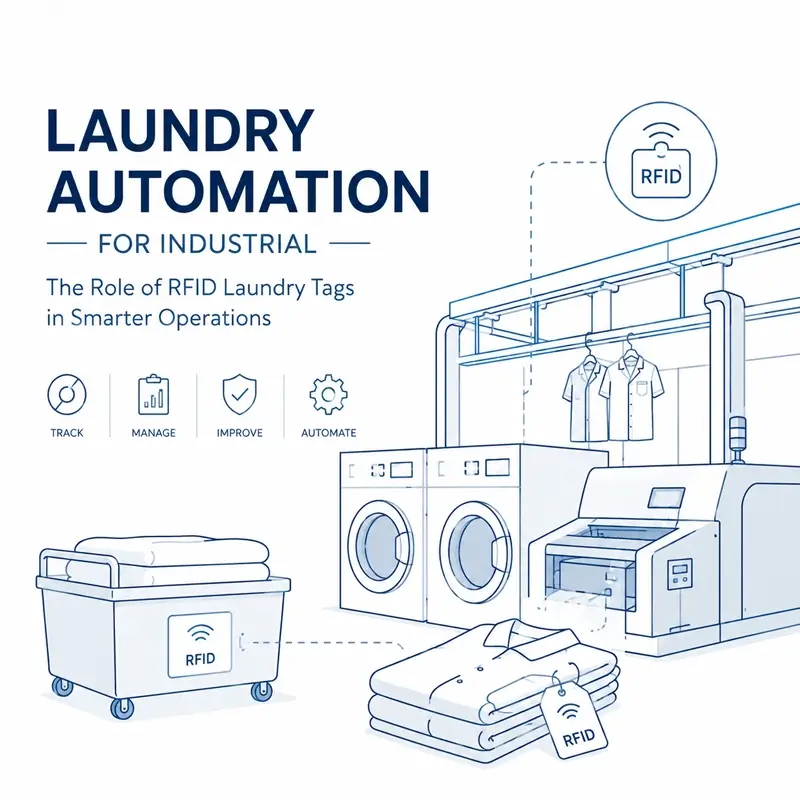
The laundry industry is undergoing a major transformation driven by digital technologies and automation. As industrial laundries handle thousands of linens, uniforms, garments, and textiles every day, traditional manual processes often create inefficiencies, inventory losses, and rising labor costs.
This is where laundry automation powered by RFID laundry tags is making a significant impact. By combining RFID technology with automated workflows, businesses can achieve real-time visibility, improve operational efficiency, and reduce textile losses throughout the entire laundry cycle.
Whether you operate a healthcare laundry, hotel laundry, uniform rental service, or commercial textile processing facility, implementing an RFID-based laundry tracking system can help streamline operations and maximize profitability.
2. Challenges Faced by Industrial Laundries
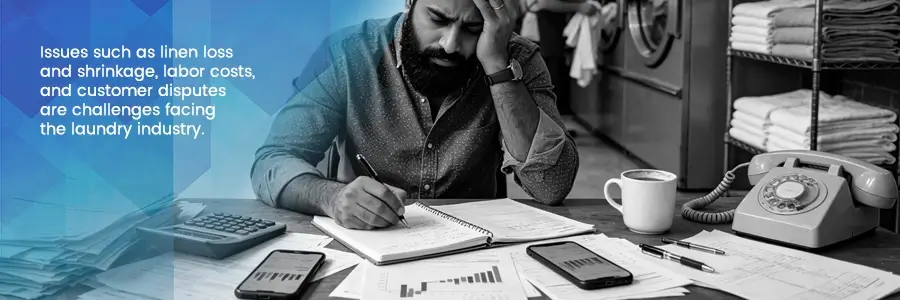
Industrial laundries face several operational challenges that directly affect productivity and customer satisfaction.
Linen Loss and Shrinkage
Thousands of linens may be misplaced, lost, or mixed with other customers' inventory during transportation and processing.
Labor-Intensive Tracking
Manual counting and sorting require significant labor resources and are prone to human error.
Inventory Visibility Issues
Without accurate tracking, laundries struggle to know where specific items are located in the processing cycle.
Customer Billing Disputes
Inaccurate inventory records often lead to disagreements regarding delivered or missing items.
Compliance Requirements
Healthcare and hospitality industries require strict tracking of textiles to maintain hygiene standards and operational accountability.
These challenges create the need for advanced industrial laundry automation solutions.
3. Why Laundry Automation Is Essential
Modern laundry facilities process massive volumes of textiles every day. Automation is no longer a luxury—it is a necessity for sustainable growth.
Key Benefits of Laundry Automation
- Reduce manual labor costs
- Minimize inventory losses
- Improve operational efficiency
- Increase processing accuracy
- Enable real-time inventory visibility
- Enhance customer satisfaction
- Generate actionable business insights
By integrating RFID technology into daily operations, businesses can create a fully automated RFID laundry management system that delivers measurable ROI.
4. How RFID Laundry Automation Works
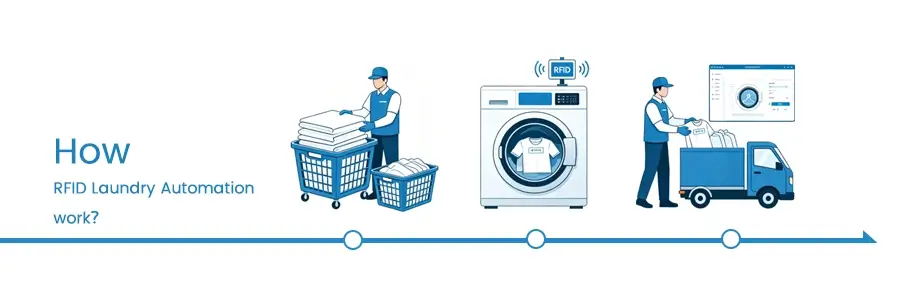
RFID (Radio Frequency Identification) technology uses embedded electronic tags attached to textiles. Each RFID laundry tag contains a unique identifier that can be read wirelessly without direct line-of-sight.
The Process
- RFID tags are attached to linens, uniforms, or garments.
- RFID readers capture tag information automatically.
- Software records each item's location and status.
- Real-time data updates throughout the laundry cycle.
- Managers access detailed reports and analytics.
This creates a complete linen tracking system that provides visibility from collection to delivery.
5. RFID Automation Throughout the Laundry Process
Collection
Textiles are automatically identified when collected from customer locations.
Receiving
Incoming items are counted instantly using RFID portals, eliminating manual inventory checks.
Sorting
Automated systems identify textile categories and route them to the appropriate washing process.
Washing and Drying
RFID data remains associated with each item throughout cleaning operations.
Finishing and Packaging
Clean textiles are tracked as they move through ironing, folding, and packaging stages.
Distribution
Outgoing shipments are verified automatically before delivery.
This end-to-end laundry tracking system dramatically improves operational transparency and accountability.
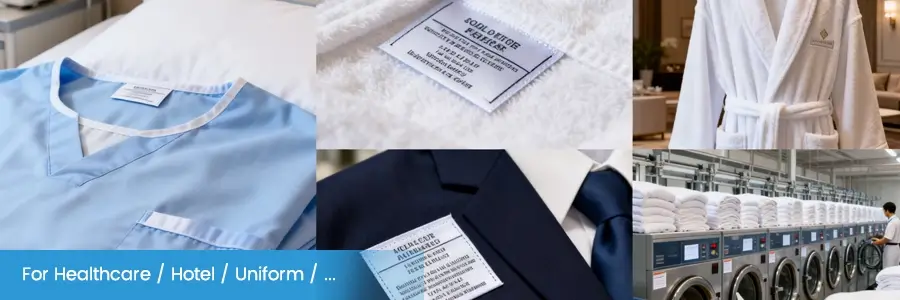
6. Industries That Benefit Most
Many industries rely heavily on textile management and can benefit from RFID-enabled automation.
| Industry |
Common Items Tracked |
Key Benefits |
| Healthcare |
Gowns, scrubs, bed linens |
Compliance, hygiene control |
| Hospitality |
Towels, sheets, robes |
Reduced losses, better inventory |
| Uniform Rental |
Workwear, uniforms |
Improved accountability |
| Commercial Laundries |
Mixed customer textiles |
Faster processing and profitability |
1)Healthcare
Hospitals rely on RFID-enabled RFID linen management solutions to track bed sheets, gowns, scrubs, and surgical textiles.
Benefits:
- Improved infection control
- Reduced linen loss
- Better compliance reporting
2)Hospitality
Hotels manage large inventories of towels, sheets, robes, and table linens.
Benefits:
- Accurate inventory management
- Lower replacement costs
- Enhanced guest experience
3)Uniform Rental Services
Businesses providing workwear and uniforms require precise garment tracking.
Benefits:
- Automated inventory management
- Improved customer service
- Reduced garment replacement expenses
4)Commercial Laundries
Large-scale laundries serving multiple customers can greatly benefit from commercial laundry RFID systems.
Benefits:
- Faster processing
- Higher throughput
- Increased profitability
7. RFID Laundry Tags: The Core Technology
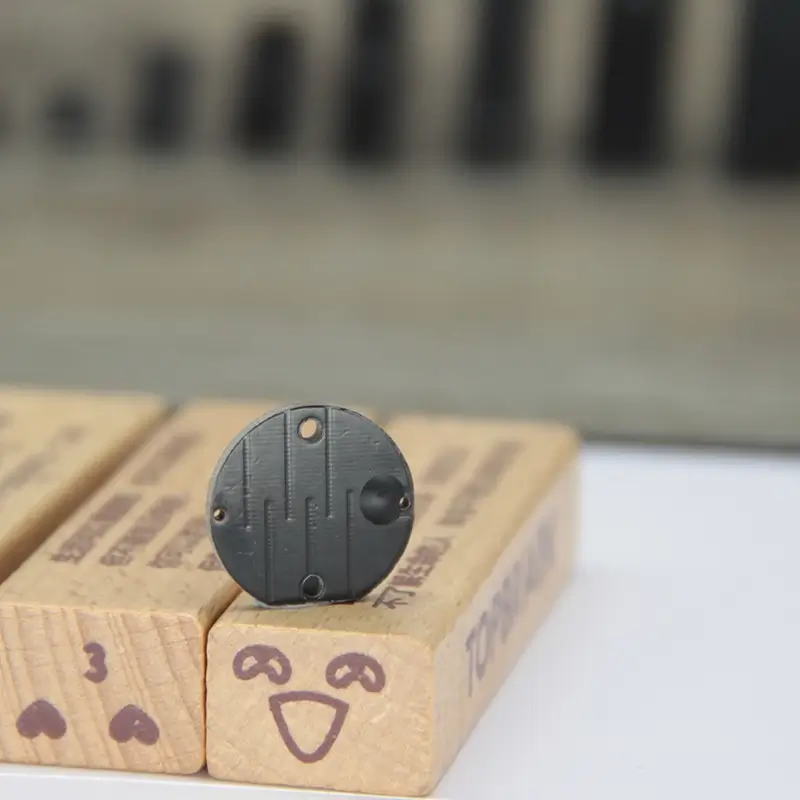
The foundation of any successful laundry automation system is the RFID laundry tag.
These specially designed tags are engineered to withstand harsh industrial laundry environments while maintaining reliable performance.
Features of RFID Laundry Tags
- Waterproof construction
- Heat resistance
- Chemical resistance
- Flexible textile-friendly design
- Long operational lifespan
- High read accuracy
A high-quality washable RFID tag can endure hundreds of wash cycles while continuously providing accurate tracking data.
RFID Textile Tracking Benefits
Through advanced RFID textile tracking, businesses can monitor individual items throughout their lifecycle, helping optimize textile utilization and replacement planning.
8. Other Applications of RFID Laundry Tags
Beyond industrial laundries, RFID laundry tags are increasingly used in various sectors.
Healthcare Asset Tracking
Track reusable medical textiles and specialty garments.
Uniform Management
Monitor employee uniforms and ensure accountability.
Hospitality Linen Control
Manage inventory across multiple hotel locations.
Textile Rental Services
Track rental assets throughout circulation cycles.
Manufacturing and Textile Production
Monitor textile inventory and production workflows.
These applications demonstrate the versatility of RFID-based tracking solutions.
9. How to Choose the Right RFID Laundry Tag
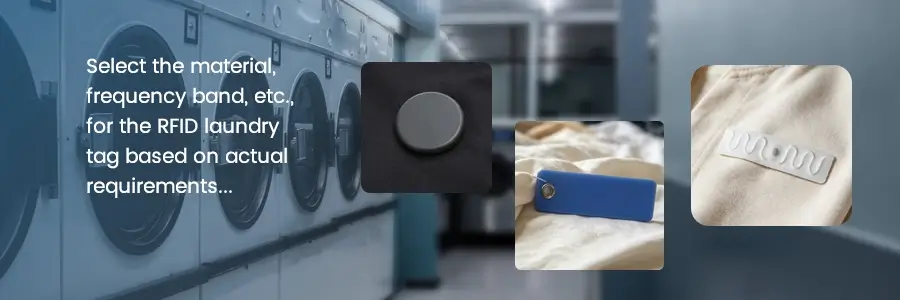
Selecting the proper RFID tag is critical for long-term success.
Consider Material Compatibility
Different textiles may require different tag attachment methods.
Evaluate Wash Cycle Durability
Choose tags rated for the expected number of industrial washing cycles.
Check Temperature Resistance
Ensure tags can withstand drying, ironing, and sterilization processes.
Verify Reading Performance
Reliable RFID performance is essential for accurate inventory management.
Assess Installation Methods
Common attachment options include:
- Sewing
- Heat sealing
- Pouch insertion
Working with an experienced RFID supplier can help ensure optimal tag selection.
10. Custom RFID Laundry Tags for Your Business
Every laundry operation has unique requirements. Custom RFID laundry tags provide flexibility for specialized applications.
Customization Options
- Different tag sizes
- Custom chip configurations
- Branding and logo printing
- Unique identification coding
- Specialized attachment methods
Customized solutions help businesses maximize tracking efficiency while meeting operational requirements.
Whether you manage healthcare linens, hotel textiles, uniforms, or rental garments, custom RFID solutions can be tailored to your workflow.
11. FAQ
Q1. Is a laundry automation system difficult to implement?
No. Modern RFID laundry automation solutions are designed for seamless integration into existing laundry operations. Most systems can be deployed gradually without disrupting daily production.
Q2. How long does an RFID laundry tag last?
A quality RFID laundry tag can typically survive 200–300 industrial wash cycles or more, depending on the operating environment and tag design.
Q3. Will RFID laundry tags affect linen comfort?
No. RFID laundry tags are lightweight, flexible, and designed to remain virtually unnoticeable when attached correctly.
Q4. Which businesses benefit most from laundry automation?
Hospitals, hotels, uniform rental companies, textile rental services, and commercial laundries gain the greatest benefits from laundry automation systems.
Q5. Can RFID tags survive industrial washing and sterilization?
Yes. Industrial-grade washable RFID tags are specifically engineered to withstand washing, drying, sterilization, and chemical exposure.
Q6. What is the reading range of RFID laundry tags?
Reading range varies depending on tag type, reader configuration, and operating environment. Most UHF RFID laundry tags can be read from several feet away.
Q7. Can RFID laundry tags be customized?
Absolutely. RFID laundry tags can be customized in size, material, chip type, branding, and encoding to meet specific business requirements.
Q8. How much can laundry automation reduce operating costs?
Many industrial laundries report significant savings through reduced labor requirements, lower linen replacement costs, improved inventory accuracy, and increased operational efficiency.
12. Conclusion
As the laundry industry becomes increasingly data-driven, laundry automation is emerging as a critical tool for improving efficiency, reducing costs, and enhancing customer service.
By combining advanced software with durable RFID laundry tags, businesses can create a fully automated RFID laundry management solution that provides complete visibility across the entire textile lifecycle.
-------------------
Welcome to contact us!
RFIDSilicone is Your Best RFID & NFC Partner!
19+ years experience in RFID products (RFID wristband, RFID sticker/tag, RFID card etc).
Our own factory passed ISO9001: 2015 & ISO14001:2015. We have SGS, ROHS, REACH, FDA certificates etc.