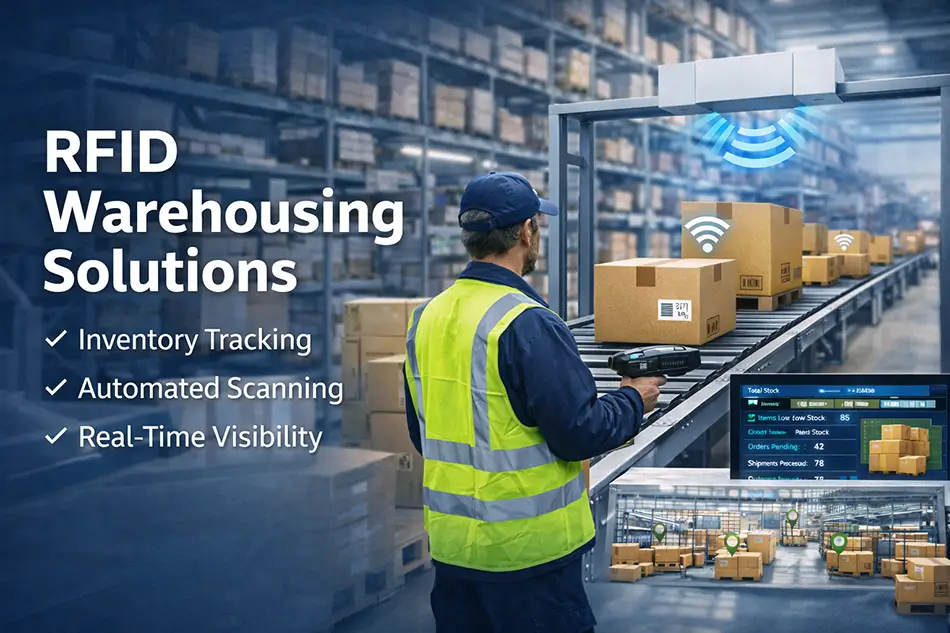
RFID Warehousing Solutions
Modern warehouses are facing increasing challenges such as inventory inaccuracies, inefficient manual processes, and poor visibility of stock movement. Traditional barcode-based systems require manual scanning and line-of-sight operation, which often slows down operations and increases the risk of human error.
RFID warehousing solutions use Radio Frequency Identification technology to automatically track goods throughout the entire warehouse process. By attaching RFID tags to items, pallets, or cartons and deploying RFID readers at key checkpoints, warehouses can achieve real-time inventory visibility, automated data collection, and significantly improved operational efficiency.
This technology enables businesses to transform traditional warehouses into intelligent, data-driven logistics centers.
What Is an RFID Warehousing Solution?
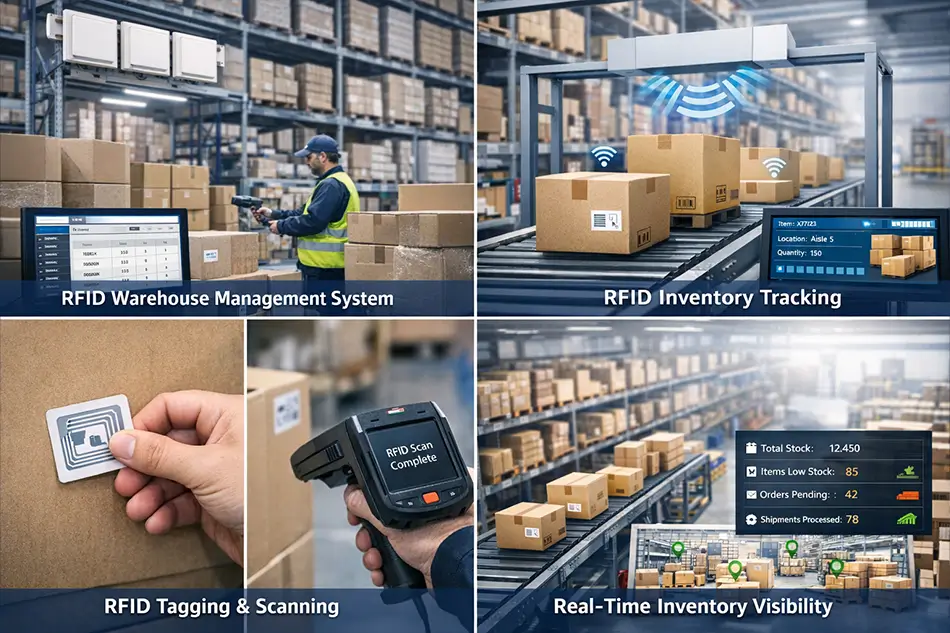
An RFID warehousing solution is an integrated system that combines RFID tags, RFID readers, antennas, and warehouse management software (WMS) to monitor and manage inventory automatically.
Each product or pallet is equipped with an RFID tag containing a unique identification number. RFID readers installed in warehouse areas such as receiving docks, storage racks, and shipping gates automatically capture tag data and transmit it to the management system.
The system records and updates information such as:
- Item ID
- Quantity
- Location
- Movement history
- Storage status
This automated data collection eliminates manual scanning and allows warehouse managers to access real-time inventory information at any time.
How RFID Works in Warehouse Management
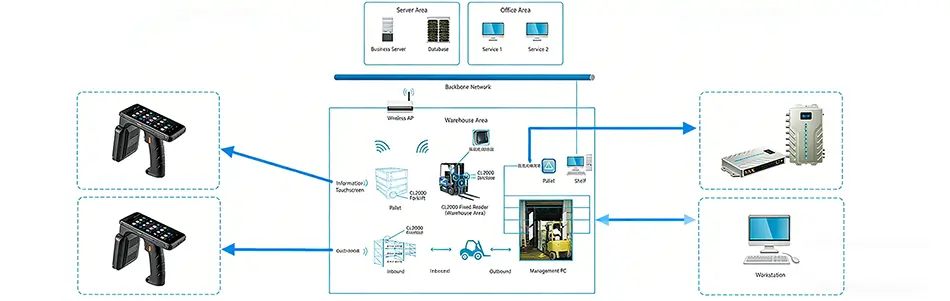
An RFID warehouse management system typically works through the following process:
1. Goods Tagging
RFID tags are attached to products, cartons, or pallets before entering the warehouse. Each tag stores a unique identification code linked to the product information in the system.
2. Receiving and Inbound Management
When goods arrive at the warehouse, RFID readers automatically identify tagged items as they pass through the receiving gate. The system verifies the shipment and records the inbound data instantly.
3. Smart Storage and Location Tracking
After receiving, goods are placed in designated storage locations. RFID readers installed on shelves or forklifts automatically update item locations in the system.
4. Inventory Monitoring
Warehouse managers can perform inventory checks without manually scanning each item. RFID readers can detect multiple tags simultaneously, enabling rapid inventory counting and tracking.
5. Order Picking and Outbound
During order fulfillment, RFID technology verifies picked items and quantities automatically. When products leave the warehouse, readers at exit points record outbound transactions in real time.
Key Benefits of RFID Warehousing Solutions
1. Real-Time Inventory Visibility
RFID systems provide instant visibility of inventory levels and item locations throughout the warehouse. Managers can track stock movement in real time and quickly identify shortages or misplaced goods.
2. Improved Inventory Accuracy
Traditional manual inventory methods can result in errors and discrepancies. RFID technology automatically records product movement and can achieve inventory accuracy rates close to 99%, significantly reducing stock inconsistencies.
3. Faster Warehouse Operations
RFID readers can scan multiple items simultaneously without line-of-sight requirements. This dramatically accelerates processes such as receiving, picking, and shipping, reducing operational delays and improving order fulfillment speed.
4. Reduced Labor Costs
Automated data capture reduces the need for manual scanning, paperwork, and repetitive inventory checks. Employees can focus on higher-value tasks such as quality control and process optimization.
5. Enhanced Warehouse Space Utilization
RFID data analytics provide insights into product movement and storage patterns, enabling warehouses to optimize layout design and improve storage efficiency.
Typical Applications of RFID in Warehousing
RFID warehouse solutions are widely used across many industries, including:
Retail and E-commerce
Track high-volume inventory and enable faster order fulfillment.
Manufacturing
Monitor raw materials and finished products across production and storage.
Logistics and Distribution
Improve shipment accuracy and streamline supply chain operations.
Pharmaceutical and Healthcare
Ensure product traceability and regulatory compliance.
Automotive Industry
Manage parts inventory and reduce production delays.
Future of Smart Warehousing with RFID
As warehouses continue to adopt automation and digital transformation, RFID technology will play an increasingly important role in smart logistics systems. When integrated with technologies such as IoT, AI analytics, and automated guided vehicles (AGVs), RFID can help create highly intelligent warehouses capable of real-time decision making and predictive inventory management.
Conclusion
RFID warehousing solutions provide businesses with a powerful way to improve inventory accuracy, operational efficiency, and supply chain visibility. By automating inventory tracking and enabling real-time data collection, RFID technology helps warehouses reduce costs, eliminate errors, and respond faster to market demands.
For companies looking to modernize their logistics operations, implementing an RFID warehouse management solution is a key step toward building a smarter and more efficient supply chain. Looking for reliable RFID products? Explore our full range of RFID tags and warehouse solutions.