RFID Medical Applications: Enhancing Safety, Traceability, and Anti-Counterfeiting in Healthcare
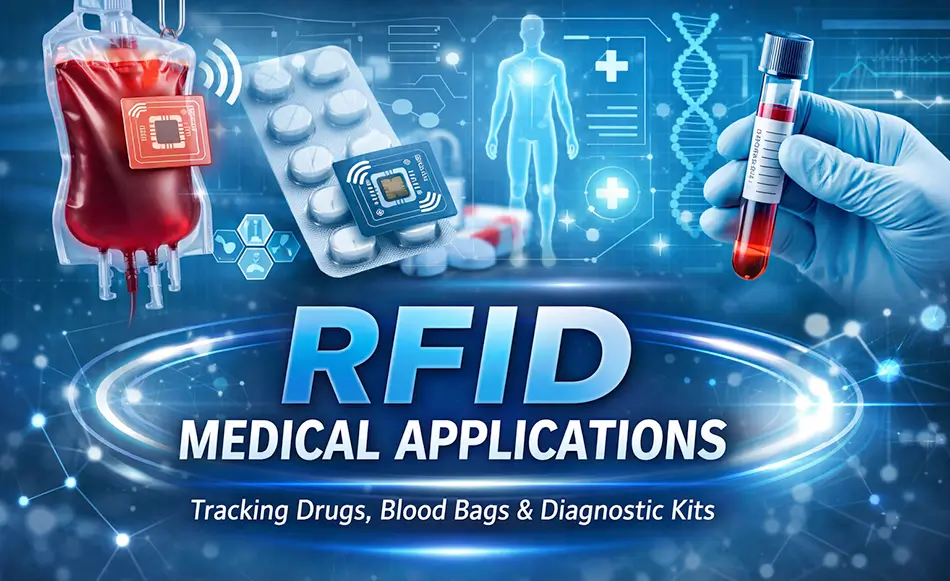
In modern healthcare systems, safety, traceability, and efficiency are critical. From pharmaceuticals to blood products and diagnostic kits, ensuring accurate identification and real-time tracking is essential.
RFID (Radio Frequency Identification) technology provides a powerful solution by enabling contactless identification, real-time tracking, and full lifecycle visibility of medical items. Compared with traditional barcode systems, RFID allows bulk scanning without line-of-sight and significantly reduces human error.
What is RFID in Healthcare?
RFID is a wireless technology that uses radio waves to identify and track objects equipped with RFID tags. Each tag contains a unique ID, which can be read automatically by RFID readers and transmitted to a central system.
In healthcare environments, RFID tags are widely applied to:
- Pharmaceutical packaging
- Blood bags
- Diagnostic kits
- Medical consumables
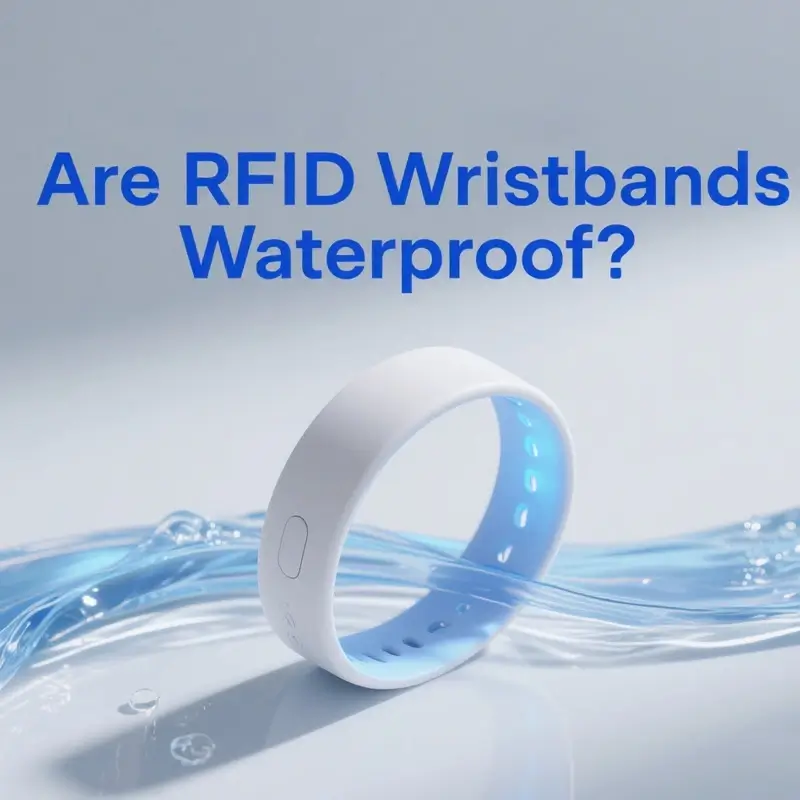
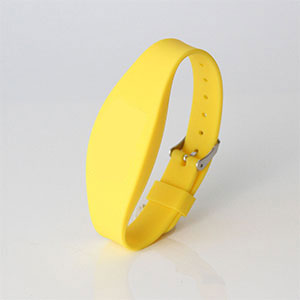
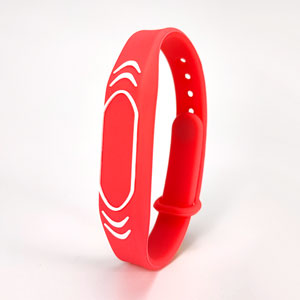
- Patient wristbands
This enables automated data capture and real-time monitoring across the entire medical workflow.
Key RFID Medical Applications
1. RFID for Pharmaceutical Tracking & Anti-Counterfeiting
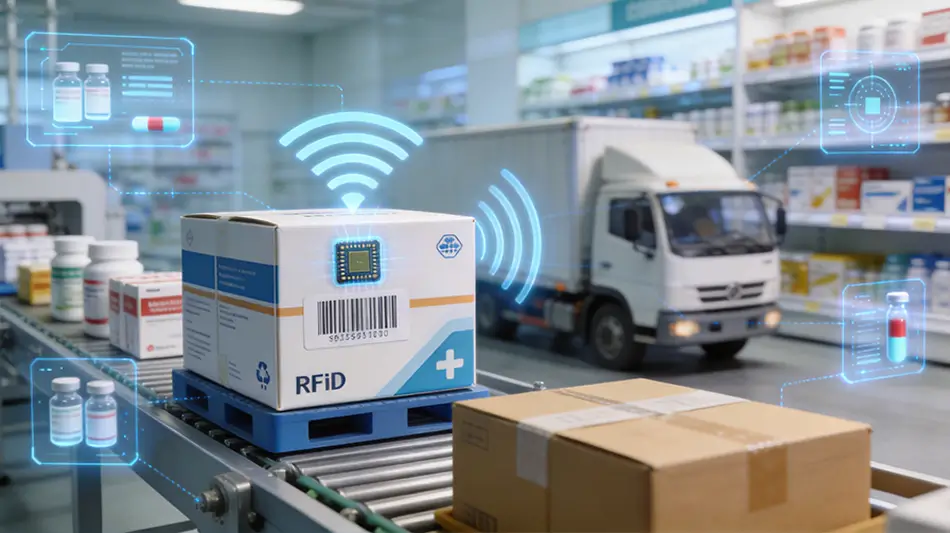
Counterfeit drugs and medication errors are major risks in healthcare. RFID provides a secure and traceable solution.
How it works:
- Each drug package is assigned a unique RFID ID
- Data is recorded from production → distribution → hospital → patient
- RFID readers verify authenticity at each stage
Key benefits:
- Prevent counterfeit drug circulation
- Ensure correct medication delivery
- Real-time inventory visibility
- Automatic expiration tracking
RFID enables full lifecycle traceability of drugs, reducing manual errors and improving patient safety.
2. RFID for Diagnostic Kits & Medical Consumables
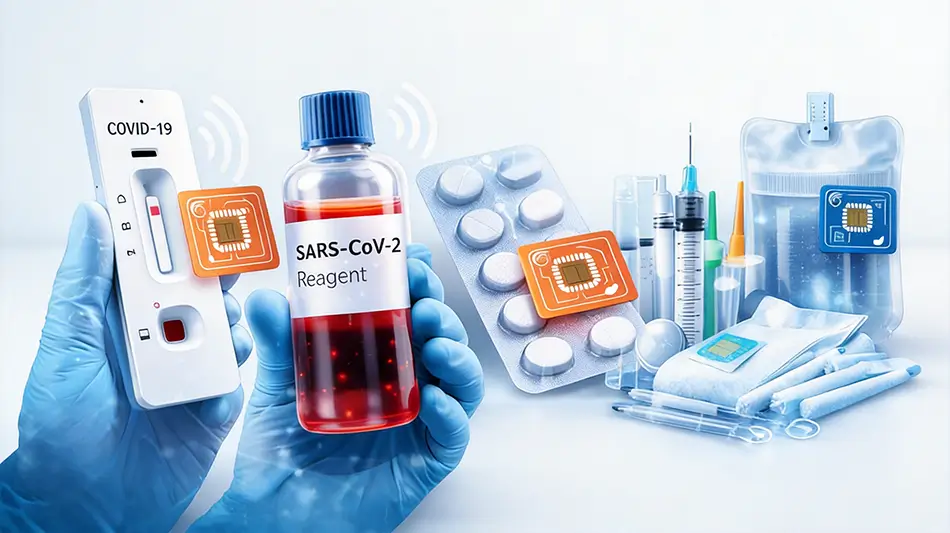
RFID is widely used in test kits, reagents, and disposable medical supplies.
Typical applications:
- COVID/IVD test kits tracking
- Laboratory reagent management
- Surgical consumables tracking
Core advantages:
- Batch-level traceability
- Automated stock monitoring
- Reduced waste and stock-outs
- Improved compliance and audit readiness
RFID tags can withstand sterilization, temperature changes, and harsh environments, making them ideal for medical consumables.
3. RFID Blood Bag Tracking System
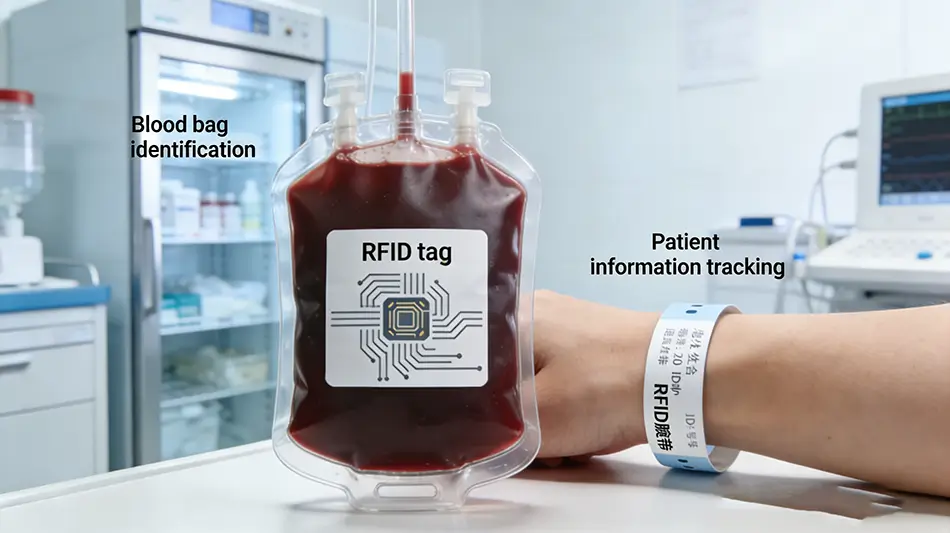
Blood management is one of the most critical applications of RFID in healthcare.
System components:
- RFID-tagged blood bags
- Patient RFID wristbands
- RFID readers and database system
Workflow:
- Blood collection → tagging
- Testing & storage → tracking
- Matching patient → verification
- Transfusion → confirmation
Key benefits:
- Accurate blood-patient matching
- Real-time inventory management
- Reduced transfusion errors
- Full traceability for compliance
RFID significantly improves transfusion safety by minimizing human errors and ensuring correct patient identification.
4. RFID for Sample & Laboratory Management
Medical samples require strict tracking throughout testing processes.
RFID enables:
- Sample identification and tracking
- Chain-of-custody management
- Automated data logging
- Error reduction in lab workflows
Each sample is assigned a unique RFID identity, ensuring zero mix-ups and accurate diagnostics.
5. RFID for Medical Inventory & Asset Management
Hospitals handle thousands of high-value assets and consumables daily.
RFID applications include:
- Drug inventory management
- Equipment tracking
- Consumables monitoring
- Smart cabinets and storage
Benefits:
- Real-time inventory visibility
- Reduced loss and theft
- Faster asset location
- Optimized stock levels
RFID helps hospitals maintain efficient operations and reduce shortages or delays in treatment.
Core Benefits of RFID in Healthcare
1. Enhanced Patient Safety
RFID minimizes human errors in medication, transfusion, and procedures.
2. Anti-Counterfeiting Protection
Unique identifiers ensure authenticity of drugs and medical products.
3. Real-Time Traceability
Track every item across the entire lifecycle—from production to usage.
4. Operational Efficiency
Automated scanning reduces manual workload and improves accuracy.
5. Regulatory Compliance
RFID provides complete data records for audits and healthcare regulations.
RFID adoption has been proven to reduce medical errors and improve overall healthcare quality.
Why Choose RFID Over Barcodes in Medical Applications?
| Feature |
RFID |
Barcode |
| Line-of-sight required |
No |
Yes |
| Bulk scanning |
Yes |
No |
| Data storage |
High |
Limited |
| Automation |
High |
Low |
| Error rate |
Low |
Higher |
RFID enables faster, more accurate, and scalable healthcare management systems.
Future Trends of RFID in Healthcare
- Integration with IoT and cloud platforms
- Temperature-sensing RFID for cold chain drugs
- Smart hospitals with full automation
- AI-driven data analytics based on RFID tracking
RFID is becoming a core infrastructure technology in digital healthcare transformation.
RFID technology is transforming healthcare by providing secure, automated, and real-time tracking solutions for pharmaceuticals, blood bags, diagnostic kits, and medical consumables.
By improving traceability, preventing counterfeiting, and enhancing patient safety, RFID is no longer optional—it is becoming a standard in modern medical systems.